$45
Buy Now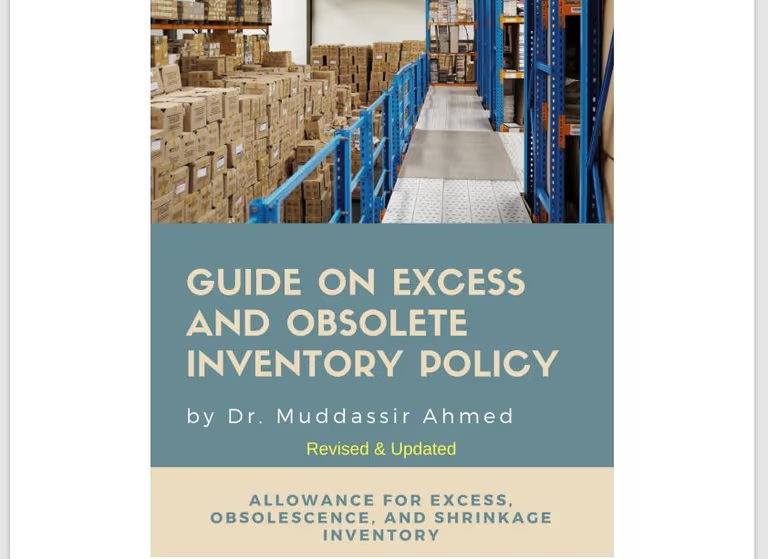
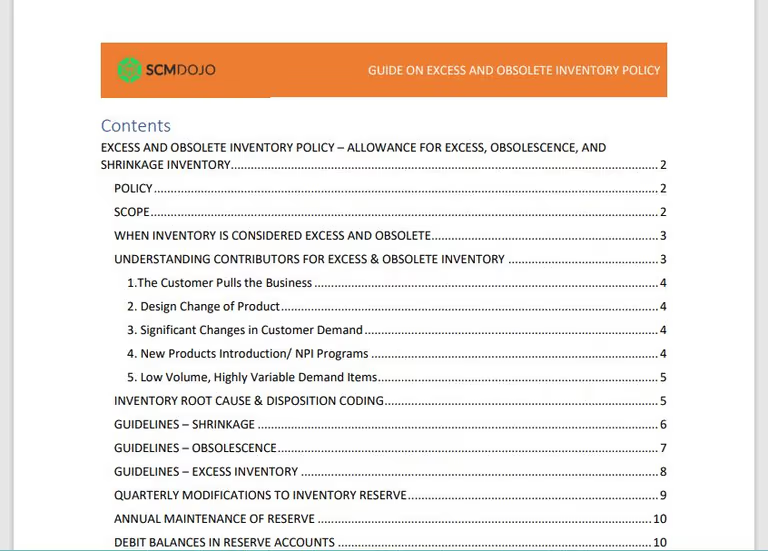
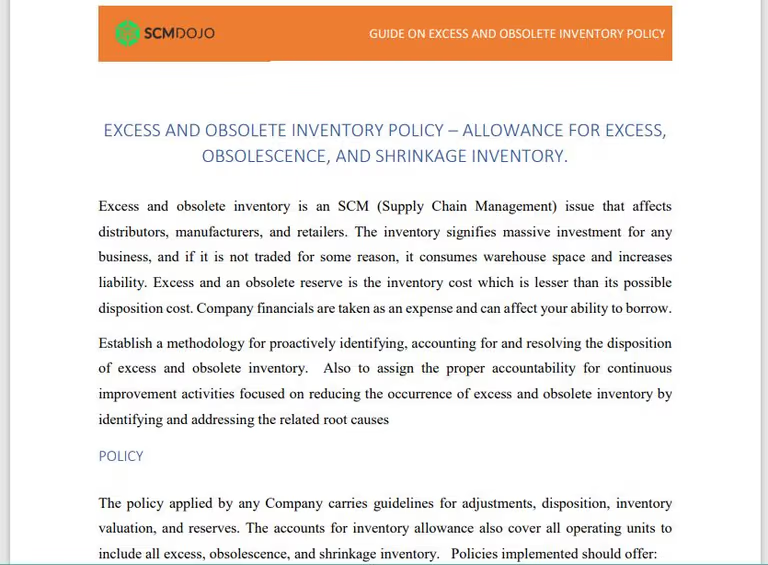
Are you struggling with excess and obsolete inventory that ties up working capital and clutters your shelves? This Excess and Obsolete Inventory Policy provides a complete framework for financial controllers, supply chain managers, and CFOs to manage inventory write-offs, reduce stock risks, and align with global best practices.
This policy guide outlines how to establish reserves for shrinkage, obsolescence, and excess stock in allowance accounts, ensuring accurate financial reporting while improving operational efficiency.
Why You Need an Excess and Obsolete Inventory Policy
Companies often face losses due to damage, deterioration, obsolescence, or shifts in customer demand. Without a clear inventory policy, these issues create hidden costs and inaccurate reporting.
An Excess and Obsolete (E&O) Policy helps organizations:
-
Accurately record reserves for excess and obsolete inventory.
-
Standardize procedures across business units and divisions.
-
Shift from reactive inventory management to a proactive, preventive approach.
-
Improve cash flow and profitability by reducing waste.
Advantages of an Excess and Obsolete Inventory Policy
This 12-page, fully customizable inventory policy template helps you establish a clear and consistent approach to managing surplus and obsolete stock. Key benefits include:
1. How an Excess and Obsolete Inventory Policy Improves Inventory Reserves Evaluation
Perform quarterly reviews to ensure accurate write-offs and provisions.
2. Comprehensive Planning Strategies
Apply proven methods to maintain accuracy across all inventory levels.
3. Coverage Across All Inventory Categories
From raw stock to finished goods and work-in-process (WIP), the policy applies to every stage.
4. Flexible Formats
Available in both Microsoft Word and PDF, making it easy to edit and roll out across your organization.
5. Empowering Finance & Supply Chain Teams
Gives financial controllers and supply chain managers confidence when setting reserves for obsolete and excess stock.
6. Alignment with Standard Policies
Ensures all divisions and manufacturing units follow consistent inventory guidelines.
7. Proactive Inventory Management
Moves your business away from reactive loss recognition toward a structured, forward-looking approach.
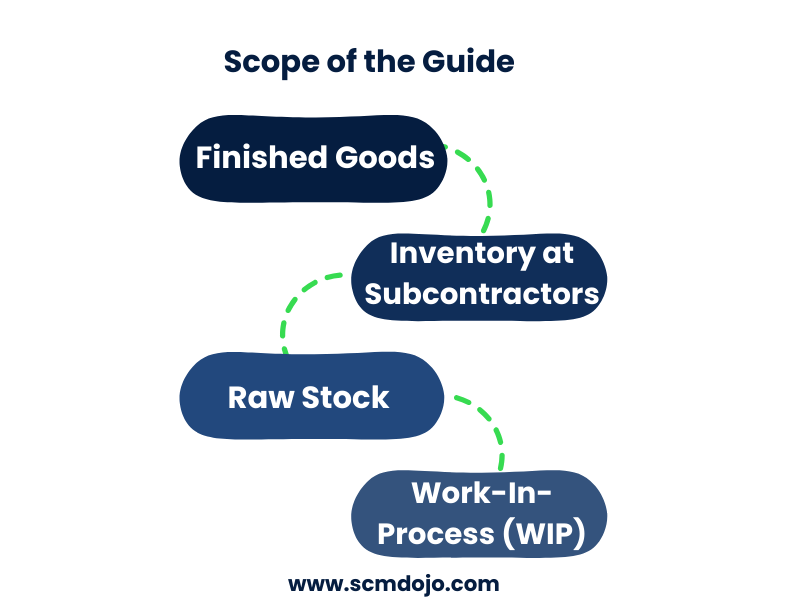
Scope of the Excess & Obsolete Inventory Policy
The policy guide covers all key inventory areas, including:
-
Finished Goods
-
Raw Materials
-
Work-in-Process (WIP)
-
Inventory held at Subcontractors
Why an Excess and Obsolete Inventory Policy Matters
Without a standardized excess and obsolete inventory management process, many businesses rely on ad hoc or reactive practices. This guide introduces a proactive approach that:
-
Identifies root causes of inventory issues.
-
Provides accountability for continuous improvement.
-
Reduces the financial impact of write-offs.
Who Should Use This Excess and Obsolete Inventory Policy?
This Excess and Obsolete Inventory Policy is designed for:
-
Financial Controllers managing allowance accounts.
-
Supply Chain Managers responsible for inventory accuracy.
-
CFOs and Executives seeking alignment across divisions.
-
Materials Management Professionals improving efficiency.
Formats & Accessibility
-
Length: 12 pages (2,696 words)
-
Formats: Word & PDF for easy customization
-
Accessibility: Available worldwide via PayPal or Gumroad
Frequently Asked Questions (FAQs)
Q: What is an Excess and Obsolete Inventory Policy?
A: It’s a formal document that defines how to identify, account for, and manage surplus or obsolete stock through reserves and write-offs.
Q: Why is it important for finance teams?
A: It ensures accurate balance sheets and prevents overstated assets caused by unsellable inventory.
Q: Does this policy apply only to finished goods?
A: No, it covers raw stock, WIP, subcontractor inventory, and finished goods.
Q: Can this policy template be customized?
A: Yes, it comes in Word and PDF formats for easy editing.
References & Recommended Resources
Watch the Free SCMDOJO webinar on “Inventory Optimization Best Practices” for the Supply Chain Community.
Agenda of the webinar
– Sharing the best practices of inventory optimization
– What skills and competencies are required to build advanced inventory models
[embedyt] https://www.youtube.com/watch?v=idFJigY8JwE[/embedyt]
In Episode 25 of The Supply Chain Show, Dr. Muddassir Ahmed interviewed Claudia Freed CEO – EALgreen, who discussed how their organization is using Excess & Obsolete Inventory to change the lives of financially disadvantaged young people through college scholarships.
[embedyt] https://www.youtube.com/watch?v=6KVixkw-W0w[/embedyt]
Access our Best Practices on our Website!
Make vs Buy Analysis Real-Life Excel Model
Deciding whether to manufacture in-house or outsource a product or service is one of the most critical decisions a business can make. SCMDOJO’s Make vs Buy Analysis Tool is designed to provide a comprehensive, data-driven framework to evaluate both quantitative costs and qualitative factors, ensuring your organization chooses the path of maximum value and minimum
Spend Analytics Tool
The Spend Analytics Tool Built the Way Procurement Consultants Actually Work Stop building spend reports from scratch every quarter. This plug-and-play Excel template gives you a fully structured, dashboard-ready spend analytics tool — supplier breakdown, category analysis, regional spend, OTD KPIs, and payment terms intelligence — all from a single data paste. What is Spend
Logistics Operations Risk Assessment
At SCMDOJO, we understand the complexities of logistics risk management, which is why we have designed a Comprehensive Logistics Operations Risk Assessment Template—a structured and insightful tool that helps businesses identify, evaluate, and mitigate key risks across all levels of logistics operations. In today’s fast-paced supply chain environment, logistics operations are exposed to a wide
Procurement Risk Assessment
Why do you need Procurement Risk Assessment? Procurement is one of the most critical functions in any organization, directly impacting cost efficiency, supplier performance, compliance, and overall supply chain stability. However, procurement operations are constantly exposed to risks—ranging from supplier failures, financial mismanagement, contract disputes, regulatory compliance challenges, and technology failures to cybersecurity threats. At
Ratings and Reviews
What's your experience? We'd love to know!
Write a ReviewNo reviews found.